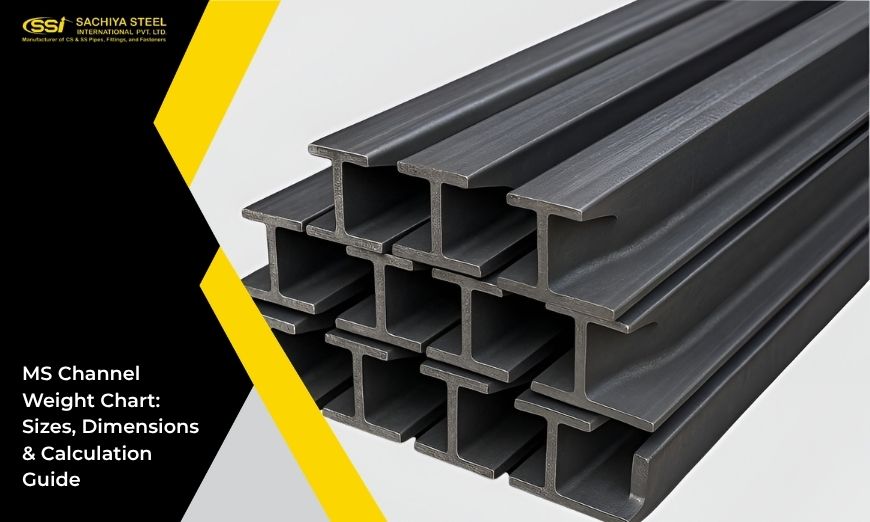
MS channels are structural steel sections shaped like the letter C or U. They’re one of the most widely used steel sections in India, found in everything from industrial sheds and mezzanine floors to conveyor frames, truck bodies, and staircase stringers.
Because they’re bought in bulk and priced by weight, even a small discrepancy in the weight per metre adds up fast. A common problem faced when buying or fabricating MS channels is that the supplier quotes a weight that differs from what is delivered. This gap significantly affects the budget.
That’s why a reliable MS channel weight chart matters. This guide covers everything you need, from sizes, dimensions, weight per metre, the calculation formula, and answers to the questions buyers ask most.
What is an MS Channel?
An MS channel (mild steel channel) is a structural steel section shaped like the letter C or U. It has a flat web with two parallel flanges. You’ll find it in sheds, mezzanine floors, conveyor frames, truck bodies, and general fabrication work. Mild steel channels are made to the IS 2062 standard, typically in grades E250, E275, or E350. E250 is the most common grade for general construction and light fabrication.
MS Channel Weight Chart in Kg
The channel weight chart in kg per metre is the most useful format for procurement and estimation. Here are common sizes:
| Designation | Depth (mm) | Flange (mm) | Web tw (mm) | Flange tf (mm) | Weight kg/m | Weight kg/ft |
|---|---|---|---|---|---|---|
| ISMC 75 | 75 | 40 | 4.4 | 7.3 | 7.14 | 2.18 |
| ISMC 100 | 100 | 50 | 4.7 | 7.5 | 9.56 | 2.91 |
| ISMC 125 | 125 | 65 | 5.0 | 8.1 | 13.10 | 3.99 |
| ISMC 150 | 150 | 75 | 5.4 | 9.0 | 16.40 | 5.00 |
| ISMC 175 | 175 | 75 | 5.7 | 10.2 | 19.10 | 5.82 |
| ISMC 200 | 200 | 75 | 6.1 | 11.4 | 22.10 | 6.74 |
| ISMC 225 | 225 | 80 | 6.4 | 12.4 | 25.90 | 7.89 |
| ISMC 250 | 250 | 82 | 7.1 | 14.1 | 30.40 | 9.27 |
| ISMC 300 | 300 | 90 | 7.8 | 13.6 | 35.80 | 10.92 |
| ISMC 350 | 350 | 100 | 8.1 | 13.5 | 42.10 | 12.84 |
| ISMC 400 | 400 | 100 | 8.6 | 15.3 | 49.40 | 15.06 |
MS C Channel Weight Chart (Size × Weight)
The MS C channel weight chart below covers the same standard IS 808 sizes plus the trade variants that Indian retailers commonly stock, like Standard (STD), Medium (MED), and Light (LT) grades.
| Size (mm) | Web tw (mm) | Weight kg/m | Weight kg/ft | Notes |
|---|---|---|---|---|
| 75 × 40 | 5.0 | 5.20 | 1.58 | Light grade — fabrication |
| 75 × 40 STD | 5.4 | 7.10 | 2.20 | Standard grade |
| 75 × 40 MED | 5.0 | 6.50 | 2.00 | Medium grade — supplier variant |
| 75 × 40 LT | 4.5 | 5.70 | 1.70 | Light variant |
| 100 × 50 STD | 5.0 | 9.56 | 2.91 | Standard — IS 808 nominal (most-asked) |
| 100 × 50 MED | 4.7 | 9.20 | 2.80 | Medium grade |
| 100 × 50 LT MED | 4.5 | 8.70 | 2.65 | Light medium variant |
| 100 × 50 LT | 4.0 | 7.90 | 2.40 | Light variant |
| 120 × 55 | 5.4 | 12.50 | 3.81 | Mid-size structural |
| 125 × 65 | 5.0 | 13.10 | 3.99 | IS 808 ISMC 125 |
| 150 × 75 | 5.4 | 16.40 | 5.00 | IS 808 ISMC 150 |
| 175 × 75 | 5.7 | 19.10 | 5.82 | IS 808 ISMC 175 |
| 200 × 75 | 6.1 | 22.10 | 6.74 | IS 808 ISMC 200 |
| 250 × 82 | 7.1 | 30.40 | 9.27 | IS 808 ISMC 250 |
MS U Channel Weight Chart
MS U channels in India are rolled to IS 808:1989. The weights below are standard ISMC values.
| Section | Depth (mm) | Flange Width (mm) | Web Thickness (mm) | Weight (kg/m) |
| ISMC 75 | 75 | 40 | 4.8 | 7.14 |
| ISMC 100 | 100 | 50 | 5.0 | 9.56 |
| ISMC 125 | 125 | 65 | 5.3 | 13.10 |
| ISMC 150 | 150 | 75 | 5.7 | 16.40 |
| ISMC 175 | 175 | 75 | 6.0 | 19.10 |
| ISMC 200 | 200 | 75 | 6.2 | 22.10 |
| ISMC 225 | 225 | 80 | 6.5 | 26.10 |
| ISMC 250 | 250 | 82 | 7.2 | 30.40 |
| ISMC 300 | 300 | 90 | 7.8 | 36.30 |
| ISMC 350 | 350 | 100 | 8.1 | 42.70 |
| ISMC 400 | 400 | 100 | 8.8 | 49.40 |
ISMC Weight Chart per IS 808:1989
ISMC stands for Indian Standard Medium-weight Channel. These are hot-rolled steel channels made to IS 808:1989. The ISMC weight chart below gives you standard kg/m values straight from the IS specification.
| Designation | Depth (mm) | Flange (mm) | Web tw (mm) | Flange tf (mm) | Weight kg/m | Weight kg/ft |
|---|---|---|---|---|---|---|
| ISMC 75 | 75 | 40 | 4.4 | 7.3 | 7.14 | 2.18 |
| ISMC 100 | 100 | 50 | 4.7 | 7.5 | 9.56 | 2.91 |
| ISMC 125 | 125 | 65 | 5.0 | 8.1 | 13.10 | 3.99 |
| ISMC 150 | 150 | 75 | 5.4 | 9.0 | 16.40 | 5.00 |
| ISMC 175 | 175 | 75 | 5.7 | 10.2 | 19.10 | 5.82 |
| ISMC 200 | 200 | 75 | 6.1 | 11.4 | 22.10 | 6.74 |
| ISMC 225 | 225 | 80 | 6.4 | 12.4 | 25.90 | 7.89 |
| ISMC 250 | 250 | 82 | 7.1 | 14.1 | 30.40 | 9.27 |
| ISMC 300 | 300 | 90 | 7.8 | 13.6 | 35.80 | 10.92 |
| ISMC 350 | 350 | 100 | 8.1 | 13.5 | 42.10 | 12.84 |
| ISMC 400 | 400 | 100 | 8.6 | 15.3 | 49.40 | 15.06 |
Jindal MS Channel Weight Chart
Jindal Steel rolls channels to IS 808:1989. The Jindal MS channel weight chart will match the ISMC values listed above within the IS tolerance band. If you see small differences between suppliers, that’s usually within the ±3% weight tolerance allowed under IS 1852.
| Mill | Manufacturing base |
|---|---|
| Jindal Steel & Power (JSPL) | Hisar / Raigarh |
| SAIL (Steel Authority) | Bhilai / Bokaro |
| RINL Visakhapatnam | Vizag, Andhra Pradesh |
| ArcelorMittal Nippon (ESSAR) | Hazira, Gujarat |
| Tata Steel | Jamshedpur, Jharkhand |
MS Channel Weight Calculation Formula
You can calculate the MS channel weight per metre using the cross-sectional area and the density of mild steel (7850 kg/m³). The MS channel weight calculator formula is given below.
MS Channel Weight Formula
Formula: Weight (kg/m) = Cross-sectional Area (cm²) × 0.7850
Example: ISMC 100 has a cross-section of 11.70 cm². Multiply by 0.7850, and you get approximately 9.18 kg/m. The IS chart shows 9.56 kg/m (slightly higher).
This is because the IS value accounts for fillet radii at the flange-to-web junction. Manual calculation using only the flat plate dimensions ignores these fillets. That’s the most common reason your calculated weight and the IS chart value don’t match.
MS Channel Sizes & Dimensions
MS channels are described by: depth × flange width × web thickness (in mm). The most common sizes in India range from 75 mm to 400 mm. Smaller sizes like ISMC 75 and ISMC 100 are used in light fabrication, railings, and conveyor frames. Larger sizes like ISMC 250 and ISMC 300 go into industrial shed structures, crane girders, and heavy platforms.
Standard lengths available are 6 metres and 12 metres. Shorter lengths cost more per kg due to cutting. If your project allows 12-metre bars, freight and handling will add cost.
MS Channel Tolerances (IS 1852)
IS 1852 sets the rolling and cutting tolerances for MS channels. Weight tolerance is ±3% of the theoretical weight. Always weigh a sample lot on delivery if the tonnage is significant.
| Parameter | IS 1852:1985 Tolerance |
|---|---|
| Web depth (≤ 200 mm) | ± 2.5 mm |
| Web depth (> 200 mm) | ± 3.0 mm |
| Flange width (≤ 100 mm) | ± 2.0 mm |
| Flange width (> 100 mm) | ± 2.5 mm |
| Sectional weight | ± 2.5 % |
| Length (fixed length) | ± 100 mm |
| Straightness | 0.2 % of length, max |
Material Grades — IS 2062 E250 to E410
Most buyers specify the E250 grade. Here’s what you actually need to know:
- E250 — yield strength 250 MPa. Standard grade for general fabrication and light structures.
- E275 — yield strength 275 MPa. A middle-ground grade, not commonly stocked. Used where E250 is marginal but a full upgrade to E350 isn’t justified. You’ll mostly see it specified in bridge components and certain public infrastructure projects.
- E350 — yield strength 350 MPa. Used where loads are higher, or the section size needs to be smaller.
Unless your structural engineer has specified E275 or E350, E250 is the preferred choice. Don’t pay the premium for a grade the design doesn’t need.
MS Channel vs MS Angle vs MS Beam
MS channel differs from MS angle, and MS beam has different parameters like cross-section, weight, and application. Refer to the table below for the complete difference.
| Section | Cross-section | Sample weight | Typical use |
|---|---|---|---|
| MS Channel (ISMC) | C-shape (web + 2 flanges) | 9.56 kg/m at 100×50 | Roof purlins, light columns, brackets |
| MS Angle (ISA) | L-shape (2 legs) | 4.50 kg/m at 50×50×5 | Trusses, gates, racks, frame work |
| MS Beam (ISMB) | I-shape (web + 2 flanges) | 11.50 kg/m at ISMB 100 | Heavy beams, columns, lintels |
Applications & Uses of MS Channels
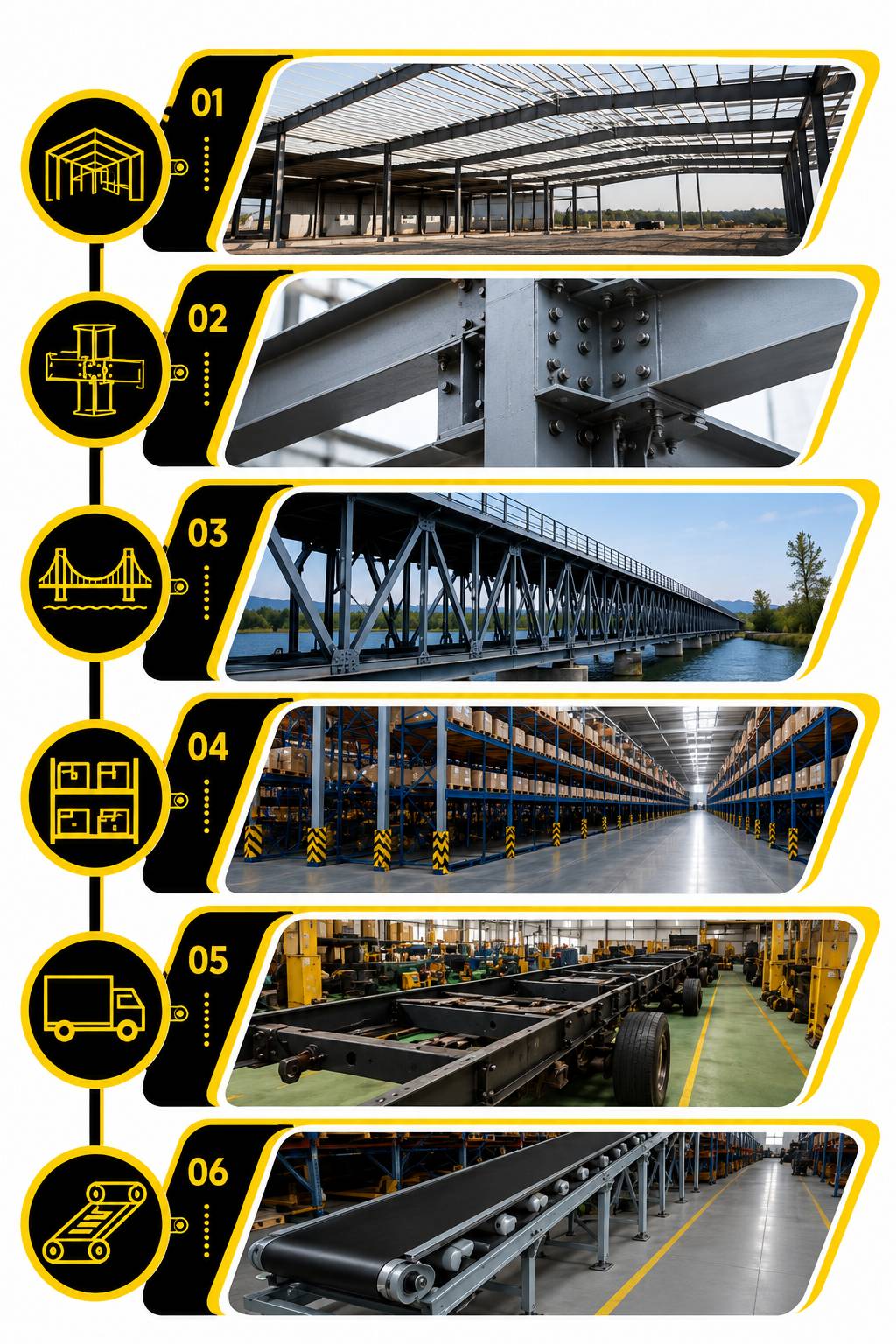
MS channels are one of the most widely used structural steel sections in Indian construction. They balance strength, weight, and cost well, and they are easy to fabricate on site. The applications below cover the bulk of where you will find them used.
Roof purlins and structural framing
ISMC 100 to ISMC 175 are the standard sizes for roof purlins in industrial sheds, warehouses, and commercial buildings.
Light structural columns and brackets
ISMC 200 to ISMC 300 are commonly used as light columns for mezzanines, intermediate floors, and loading bays.
Bridge structural elements
ISMC 300 to ISMC 400 — usually in IS 2062 Grade E410 — are used as secondary structural members in bridge construction.
Industrial racks and storage
ISMC 75 to ISMC 125 are the workhorse sizes for warehouse racking, mezzanine flooring supports, and material-handling equipment frames.
Vehicle and machinery chassis
MS channels are widely used in trailer chassis, truck body frames, and machinery base structures.
Conveyor and material handling supports
ISMC 100 to ISMC 200 are common in conveyor support frames, where the channel acts as both a load-bearing member and a guide rail for moving equipment.
Frequently Asked Questions
In common use, they refer to the same section. Technically, a U channel has squared inner corners while a C channel has tapered flanges with fillet radii. In Indian construction, both terms usually mean the same ISMC section.
The 100×50 mm channel weight is 9.56 kg/m as per IS 808:1989.
The ISMC 200 weight per meter is 22.10 kg/m. Commonly used in industrial shed structures and heavy platforms.
The 75×40 mm channel weight is 7.14 kg/m as per IS 808:1989.
ISMC 400 (400×100 mm) weighs 49.40 kg/m. It’s used in heavy crane girders and large industrial structures.
Multiply the cross-sectional area (in cm²) by 0.7850. Note: the IS 808 chart values are slightly higher because they include fillet radii that manual calculation misses. Use the chart for procurement, the formula for quick estimates.
The weight tolerance for MS channels is ±3% per IS 1852. On a 10-tonne order, that’s up to 300 kg. Always weigh a sample on delivery for large orders.
For structural work, ignore these labels. Ask for IS 808 ISMC sections and get a mill test certificate. STD/MED/LIGHT are trade variants with inconsistent thickness across suppliers. They work fine for light fabrication, but confirm the kg/m before ordering.
Use MS angle for light framing and bracing. Use MS channel where you need stiffness in one direction, like spanning, frame members, and rails. Use MS beam for heavy loads that need bending resistance in both directions. Let the load dictate the section, not the price.
Order 12 metres if your site and fabrication setup can handle it. This leads to fewer joints, less wastage, and lower cost per kg. Go with 6 metres only if transport or handling on site is a constraint.
Buy galvanised for anything exposed to rain, humidity, or coastal air. Paint is inexpensive upfront, but it needs regular maintenance and will fail faster outdoors. For semi-sheltered or indoor use, a good primer and paint are usually enough.