




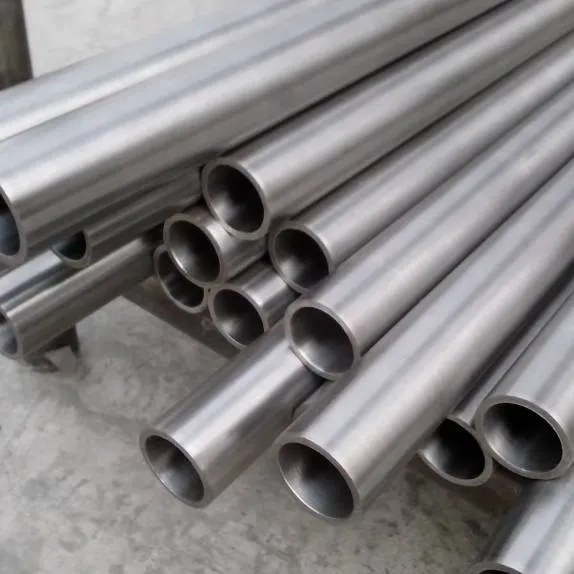
Alloy Steel Tube Specifications
ASTM A387 Grade 5 plates are chrome-molybdenum alloy steel plates supplied to ASTM and ASME standards for high-temperature pressure vessel applications.
| Parameter | Details |
|---|---|
| Standards | ASTM A213 / ASME SA-213, ASTM A209 / ASME SA-209, ASTM A519, ASTM A250 / ASME SA-250 |
| Grades | T5, T11, T22, T91, T9 |
| Forms | Seamless (hot-rolled, cold-drawn), Welded (ERW), DOM |
| OD Range | 1/2" (12.7 mm) to 5" (127 mm) for boiler/heat exchanger; up to 26" for mechanical tubing |
| Wall Thickness | 0.035" (0.89 mm) to 4.000" (101.6 mm) |
| Length | 4 to 12 metres; custom lengths available |
| Schedules | SCH 40, SCH 80, SCH 160 |
| End Types | Plain end, bevelled end |
| Surface Finish | Hot-finished, cold-finished, pickled |
Alloy Steel Tube Sizes
Alloy steel tubes are available in many sizes. Heat exchanger and boiler tubes (ASTM A213) range from 1/2" (12.7 mm) to 5" (127 mm) outside diameter, with wall thickness from 0.035" (0.89 mm) to 0.500" (12.7 mm). Standard lengths are 4 to 12 metres.
ASTM A519 mechanical tubing covers a larger range: 0.250" to 26.000" OD and 0.028" to 4.000" wall thickness. Common schedules include SCH 40, 80, 120 and 160. Custom sizes and cut lengths are available on request.
Alloy Steel Tube Price
In India, alloy steel prices typically fall within the ₹150 to ₹300 per kg, while internationally, costs are around $1 to $5 per kg. The final price varies depending on several factors, including specific grade, tube dimensions, order quantity, and surface finish. For commonly used Cr-Mo grades such as T11 and T22, prices are generally in the range of ₹150 to ₹200 per kg. Higher grades like T91 are usually priced between ₹200 and ₹300 per kg due to their increased alloy content and stricter production controls.
Alloy Steel Tube Grades
Alloy steel tubes are used where temperatures and pressures are high. They are strong, resist heat, and last a long time, so they are commonly used in power plants, refineries, and many industrial systems.
Grade T11 (1.25Cr-0.5Mo)
Grade T11 alloy steel tubes contain 1.00 to 1.50% chromium and 0.44 to 0.65% molybdenum. The grade handles continuous service up to approximately 565 °C (1050 °F). Boiler tubes, headers and steam piping in conventional power plants are the primary applications.
Grade T22 (2.25Cr-1Mo)
Grade T22 tube has higher chromium and molybdenum than T11, which allows use up to about 580 °Celsius. It is widely used in superheater tubes and high-temperature headers for better oxidation resistance.
Grade T91 (9Cr-1Mo-V)
ASTM A213 T91 tubes are a highly advanced chromium molybdenum vanadium alloy for boilers. Vanadium and niobium improve high-temperature strength, so they work reliably up to about 620 °C in superheater and reheater circuits of critical power plants.
Grade T5 (5Cr-0.5Mo)
ASTM A213 T5 alloy steel tubes are ideal for refinery heaters and high-sulphur service. With 4-6% chromium, they resist sulphidation and safely operate at temperatures up to about 595°C (1100°F).
Grade T9 Tubes
ASTM A213 T9 tubes contain approximately 8-10% chromium and 0.9-1.1% molybdenum, providing good high‑temperature strength and improved oxidation resistance over lower‑alloy grades. They are commonly used in boiler, superheater and heat exchanger service.
Types of Alloy Steel Tubes
Alloy steel tubes are available in three main forms, each suited to different pressure tolerance and cost requirements:
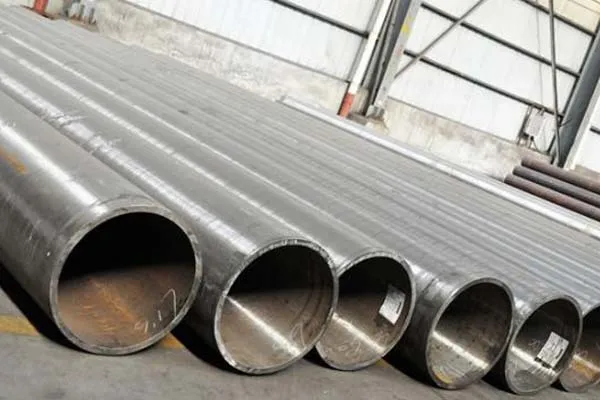
Seamless Alloy Steel Tubes
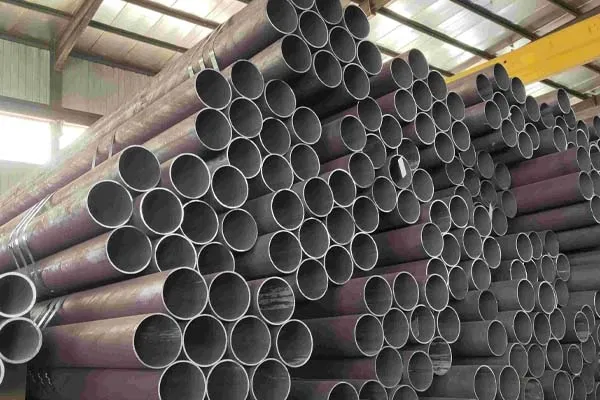
Welded Alloy Steel Tubes (ERW)
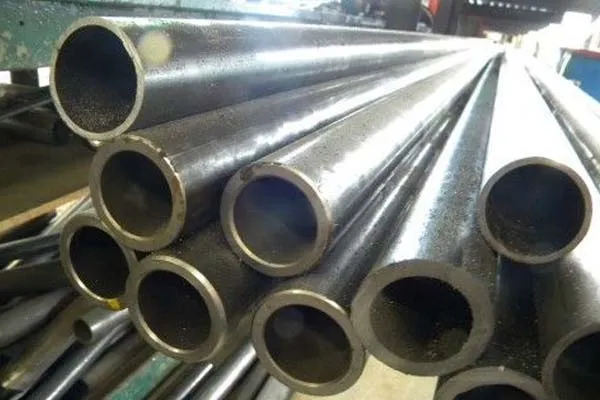
Drawn Over Mandrel (DOM) Alloy Tubing
Alloy Steel Tube Applications
Alloy steel tubes serve critical roles across power generation, oil & gas, and mechanical engineering sectors. The 3 primary application areas are listed below.
Power Generation & Boiler Tubes
Cr-Mo grades T11 and T22 are a major part of conventional boiler and superheater tubing. T91 tubes serve ultra-supercritical plants operating above 580 °C.
Oil & Gas Refinery Tubing
Grade T5 alloy steel tubes handle high-sulphur crude processing in refinery heater circuits. Cr-Mo chemistry resists sulphidation and hydrogen attack at elevated temperatures.
Mechanical & Structural Applications
Alloy steel tubes are used in aerospace frames, automotive roll cages, machine shafts, and hydraulic cylinders requiring high strength-to-weight performance.
Alloy Steel Tubes vs Carbon Steel Tubes
The table below shows the main differences between alloy steel tubes and carbon steel tubes.
| Property | Alloy Steel Tubes | Carbon Steel Tubes |
|---|---|---|
| Alloying Elements | Cr, Mo, V, Ni, Nb | Primarily carbon and manganese |
| Max Service Temperature | Up to 620°C (T91) | Typically below 400°C |
| Oxidation Resistance | High (chromium forms a protective oxide layer) | Limited above 400°C |
| Creep Resistance | Superior at elevated temperatures | Drops significantly above 370°C |
| Cost | Higher (approx. 150 to 300 INR/kg) | Lower |
| Typical Standards | ASTM A213, A519 | ASTM A179, A192, A106 |
Alloy steel tubes are the correct selection when service temperatures exceed 400 °C or when sulphidation and oxidation resistance are required.
Shipping & Packaging
 Heavy-duty wooden boxes Packing
We strictly follow seaworthy export handling standards to protect alloy steel tube from transit damage, moisture ingress, and surface contamination during long-distance dispatch.
- Heavy-duty wooden boxes with moisture barrier lining
- HDPE stretch film wrapping on all bundles
- Plastic end caps on threaded and plain-end pipes
- Silica gel desiccants to minimize moisture exposure
- ISPM-15 fumigated wooden packaging for export
 Tube Bundle Yard
Staging
Tube Bundle Yard
Staging
 Container End-Cap
Protection
Container End-Cap
Protection
 Wrapped Export-Ready
Bundles
Wrapped Export-Ready
Bundles
We Export Worldwide
Sachiya Steel International supplies alloy steel products to major industrial markets across North America, Europe, the Middle East, Asia and Africa with export-ready documentation and logistics support.
 USA
USA Canada
 Germany
 UK
UK Italy
Italy France
 Australia
 South Korea
 Indonesia
 Vietnam
 Singapore
 Malaysia
 Taiwan
 UAE
UAE Saudi Arabia
 Qatar
Qatar Oman
Oman
 South Africa
 Nigeria
 Egypt
Egypt