




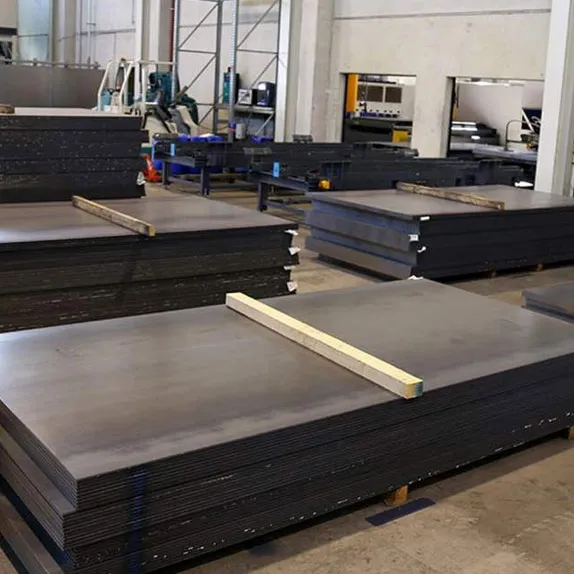
Specifications for ASTM A387 Gr.91 Plates
The specifications below cover standards, sizes, finishes, and more for this pressure vessel grade steel.
ASTM A387 Gr.91 plates conform to ASTM A387/ASME SA-387 and are supplied in hot-rolled, normalised, and tempered formats.
| Parameter | Details |
|---|---|
| Standard | ASTM A387 / ASME SA-387 |
| Class | Class 2 |
| Length Range | 3000 mm to 15000 mm |
| Surface Finish | Hot Rolled, Sandblasted, Mill Finish |
Available Sizes & Dimensions
The table below displays the standard sizes and dimensions of ASTM A387 Grade 91 plates stocked for boiler and pressure vessel fabrication.
| Parameter | Specification |
|---|---|
| Thickness | 5 mm to 300 mm (0.2 in. to 11.8 in.) |
| Width | 1,000 mm to 4,500 mm (39.4 in. to 177.2 in.) |
| Length | 3,000 mm to 18,000 mm (118.1 in. to 708.7 in.) |
ASTM A387 Grade 91 Plates Price
ASTM A387 Grade 91 plates cost between ₹200 and ₹500 per kg in India. In international markets, prices are usually $2.50 to $6.50 per kg on an FOB basis, with Class 2 and heat-treated plates costing more. The final price depends on thickness, width, length, order quantity, heat treatment, and tests such as impact, HIC or ultrasonic examination, as well as delivery terms like FOB, CIF and CFR, which affect landed cost.
Chemical Composition of ASTM A387 Grade 91 Plates
The table below lists the full chemical composition per heat analysis.
Vanadium and niobium form hard particles that stabilise the steel structure. Nitrogen strengthens the material. At the same time, lower amounts of phosphorus, sulfur, aluminium, and titanium help prevent it from brittling when used.
Mechanical Properties of ASTM A387 Grade 91 Class 2 Plates
The table below outlines the key mechanical properties of ASTM A387 Grade 91 as specified under ASTM A387 / ASME SA-387.
Grade 91 plates are supplied in a normalised and tempered condition to achieve the required creep strength.
ASTM A387 Gr.91 Class 2
| Property | Value |
|---|---|
| Tensile Strength | 585 to 760 MPa (85 to 110 ksi) |
| Yield Strength (0.2% offset), min | 415 MPa (60 ksi) |
| Elongation in 50 mm (2 in.), min | 18% |
Equivalent Designations for ASTM A387 Grade 91 Plates
The table below maps the global equivalent designations for ASTM A387 Grade 91 plates across multiple nations for easy cross-reference.
| Standard | Designation |
|---|---|
| ASTM A387 / ASME SA-387 | Grade 91 Class 2 |
| EN 10028-2 | X10CrMoVNb9-1 |
| Werkstoff Nr. | 1.4903 |
| DIN | X10CrMoVNb9-1 |
| JIS G 3203 | SFVAF 28 |
| BS | Grade 91 |
| ISO 9328-2 | X10CrMoVNb9-1 |
| UNS | K91560 |
Applications of ASTM A387 Grade 91 Plates
ASTM A387 Grade 91 plates are primarily used for welded boilers and pressure vessels in elevated-temperature service. The following subsections cover specific applications across key sectors.
Power Generation
Grade 91 alloy steel plates are standard materials for headers, steam drums and superheater components in coal-fired and combined-cycle thermal power plants.
Oil & Gas
Refinery reactors, heat exchangers and high-temperature process columns rely on A387 Gr.91 plates. The 9% chromium content provides oxidation resistance in hydrogen-rich refinery environments.
Petrochemical & Chemical Processing
Reactor vessels and distillation columns handling corrosive feedstocks at elevated temperatures use these pressure vessel plates. Grade 91 suits environments where both mechanical loading and chemical attack are present simultaneously.
ASTM A387 Grade 91 vs Other A387 Grades
The two tables below make it easier for buyers to choose the right grade for their operating conditions.
Grade 91 vs Grade 22
ASTM A387 Grade 91 plate handles higher temperatures than ASTM A387 Grade 22 plate, but it needs stricter welding and heat treatment.
| Property | ASTM A387 Grade 91 | ASTM A387 Grade 22 |
|---|---|---|
| Chromium Content | 9.00% | 2.25% |
| Molybdenum Content | 0.85 – 1.05% | 1.00% |
| Micro-Alloying Additions | Vanadium, Niobium, Nitrogen | None |
| Max Service Temperature | Above 600°C | Up to 565°C |
| Allowable Stress (High Temp) | Superior | Lower |
| Wall Thickness Required | Thinner sections possible | Thicker sections needed |
| Creep Rupture Strength | Higher | Moderate |
| Welding Controls | Strict (mandatory PWHT 730–770°C) | Less stringent |
| Typical Application | Supercritical boiler systems | Power generation pressure vessels |
| Cost | Higher | More economical |
| Best Chosen When | High temp, high-pressure service needed | Moderate temperature applications |
Grade 91 vs Grade 9
ASTM A387 Grade 91 plate and ASTM A387 Grade 9 plate have similar basic chemistry, but differ greatly in alloying elements, creep strength and use.
| Property | ASTM A387 Grade 91 | ASTM A387 Grade 9 |
|---|---|---|
| Chromium Content | 9.00% | 9.00% |
| Molybdenum Content | 0.85 – 1.05% | 0.90 – 1.10% |
| Micro-Alloying Additions | Vanadium, Niobium, Nitrogen | None |
| Creep Rupture Strength | Superior | Lower |
| Max Service Temperature | Above 600°C | Up to 540°C |
| Long-Term High-Temp Service | Highly suitable | Not recommended |
| Typical Application | Supercritical & ultra-supercritical power plants | Moderate high-temperature service |
| Fabricability | More complex (strict PWHT required) | Relatively easier |
| Cost | Higher | Lower |
| Best Chosen When | Maximum creep life is required | Budget-conscious, lower temp applications |
Shipping & Packaging
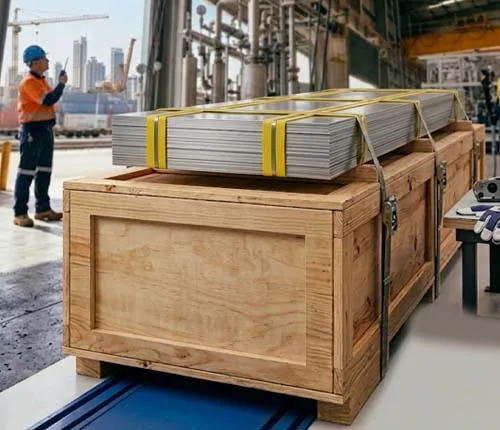 Heavy-duty wooden boxes Packing
We strictly follow seaworthy export handling standards to protect ASTM A387 Grade 91 Plates from transit damage, moisture ingress, and surface contamination during long-distance dispatch.
- Heavy-duty wooden boxes with moisture barrier lining
- HDPE stretch film wrapping on all bundles
- Plastic end caps on threaded and plain-end plate
- Silica gel desiccants to minimize moisture exposure
- ISPM-15 fumigated wooden packaging for export
 Plate Bundle Yard
Staging
Plate Bundle Yard
Staging
 Plate Bundle Edge Protection
 Wrapped Export-Ready
Bundles
Wrapped Export-Ready
Bundles
We Export Worldwide
Sachiya Steel International supplies ASTM A387 Grade 91 plates to major industrial markets across North America, Europe, the Middle East, Asia and Africa with export-ready documentation and logistics support.
 USA
USA Canada
 Germany
 UK
UK Italy
Italy France
 Australia
 South Korea
 Indonesia
 Vietnam
 Singapore
 Malaysia
 Taiwan
 UAE
UAE Saudi Arabia
 Qatar
Qatar Oman
Oman
 South Africa
 Nigeria
 Egypt
Egypt