





Stainless Steel Sheet Metal Specifications
The specifications for stainless steel sheets are mentioned below, including standard length and surface finish.
| Parameter | Specification |
|---|---|
| Material Grades | 202, 304, 304L, 316, 316L, 310, 321, 409, 410, 430 |
| Standards | ASTM A240 / ASME SA240 |
| Width Range | 1219 mm (4 ft) and 1524 mm (5 ft) standard; 1000 mm and 2000 mm to order |
| Length Range | 2438 mm (8 ft), 3048 mm (10 ft) and 3658 mm (12 ft) standard; cut lengths to 6000 mm on request |
| Form | Hot Rolled (HR), Cold Rolled (CR) |
| Finish Types | No.1, 2B, BA, No.4, Hairline, Mirror Finish |
| Surface Treatment | Pickled, Polished, Annealed |
| Edge Type | Mill Edge, Slit Edge |
SS Sheet Sizes and Thickness
The tables below explain the available sizes and the thickness gauge chart for stainless steel sheets.
Standard Sheet Sizes
The standard sheet size available for Stainless Steel Sheets is mentioned in the table below.
| Category | Details |
|---|---|
| Common Sizes | 4' x 8', 4' x 10', 5' x 8', 5' x 10', 4' x 12', 5' x 12' |
| Width Options | 4 ft, 5 ft (standard) |
| Length Options | 8 ft, 10 ft, 12 ft (standard) |
| Custom Sizes | Available as per specific project requirements (width and length customizable) |
SS Sheet Gauge, Thickness and Weight Chart
Stainless steel uses its own gauge scale, which is not the same as the carbon-steel gauge table, 18 gauge is 1.27 mm in stainless against 1.21 mm in mild steel. Weight per square metre is thickness × 8.0 g/cm³, the density used for austenitic grades.
| Gauge | Inches | mm | Weight (kg/m²) |
|---|---|---|---|
| 26 | 0.019 | 0.48 | 3.81 |
| 24 | 0.025 | 0.64 | 5.08 |
| 22 | 0.031 | 0.79 | 6.35 |
| 20 | 0.037 | 0.95 | 7.62 |
| 18 | 0.050 | 1.27 | 10.16 |
| 16 | 0.062 | 1.59 | 12.70 |
| 14 | 0.078 | 1.98 | 15.87 |
| 11 | 0.125 | 3.17 | 25.40 |
| 7 | 0.188 | 4.76 | 38.10 |
Stainless Steel Sheet Price per Kg in India
Stainless steel sheet prices depend on grade, thickness, finish, and order quantity. Pricing for Type 304 costs about ₹145–600 per kg in India or $1.71–$7.06 per kg in global markets. Type 316L is usually around 20–30% more expensive than 304. Speciality grades such as 904L and 2507 have higher premiums. Final pricing shows current nickel and chromium market conditions. Contact our sales team for a quote based on your exact specifications.
Stainless Steel Sheet Grades
Ten grades, each with its own page. The first seven are austenitic and effectively non-magnetic as supplied; 409, 410 and 430 are ferritic or martensitic and will hold a magnet: the quickest way to tell them apart on the shop floor.
Stainless Steel 202 Sheet
Austenitic, with 17.0–19.0% chromium and manganese at 7.50–10.0% standing in for most of the nickel, which is held to 4.00–6.00%. That substitution is what makes it the economy grade, it tracks the manganese price rather than the nickel price. Suited to indoor fittings, furniture frames and appliance panels; not to chlorides or coastal air.
Stainless Steel 304 Sheet
The default grade and roughly half of all stainless produced. 17.5–19.5% chromium and 8.0–10.5% nickel, the 18/8 composition, with carbon to 0.07%. Minimum 515 MPa tensile, 205 MPa yield and 40% elongation under ASTM A240. Food-contact surfaces, commercial kitchens, architectural panels and general fabrication.
Stainless Steel 304L Sheet
The same alloy with carbon capped at 0.030% under ASTM A240. That buys freedom from weld decay: chromium carbides cannot precipitate at the grain boundaries during welding, so heavy sections need no post-weld anneal. The trade is lower strength, 485 MPa tensile and 170 MPa yield against 304's 515 and 205.
Stainless Steel 310 Sheet
The heat-resisting grade, carrying 24.0–26.0% chromium and 19.0–22.0% nickel. Good for continuous service to about 1150°C in oxidising conditions, which is roughly 200°C beyond where 304 gives up. Furnace internals, heat-treatment baskets, kiln furniture and radiant tubes.
Stainless Steel 316 Sheet
304 with 2.00–3.00% molybdenum added, which lifts the pitting resistance number from about 19 to about 24. That is the difference between a panel that survives coastal air and one that freckles. Marine fittings, chemical plant, desalination and pharmaceutical work. Costs roughly 20–30% more than 304.
Stainless Steel 316L Sheet
316 with carbon at 0.030% max under ASTM A240. Worth knowing: the low carbon does not improve corrosion resistance in the parent metal, carbon plays no part in the pitting number, so 316 and 316L rate the same. What it buys is a weld that resists intergranular attack without heat treatment.
Stainless Steel 321 Sheet
Titanium-stabilised, with titanium at a minimum of five times the combined carbon and nitrogen content. The titanium takes up the carbon before chromium can, so the sheet holds its corrosion resistance through the 425–815°C band that sensitises plain 304. Exhaust sections, expansion joints and anything welded then run hot.
Stainless Steel 409 Sheet
Ferritic and titanium-stabilised, with chromium held to 10.5–11.7%, the lowest here. It is the automotive exhaust grade: cheap, formable, and happy with the heat cycling, but the low chromium means it will tea-stain outdoors. Magnetic.
Stainless Steel 410 Sheet
Martensitic, 11.5–13.5% chromium with carbon up to 0.15%. The only grade on this page that hardens by heat treatment rather than cold work, which is why it goes into cutlery, valve trim, fasteners and wear parts. Corrosion resistance is modest; hardness is the point. Magnetic.
Stainless Steel 430 Sheet
Ferritic, 16.0–18.0% chromium and no nickel at all. That makes it cheaper than 304 and, more usefully, steady when the nickel price moves. Appliance panels, decorative trim, lift interiors and signage. Not for chlorides, and it will not deep-draw like 304. Magnetic.
Surface Finishes for Stainless Steel Sheet
- No.1 Finish: hot-rolled, annealed and pickled; matte and slightly scaled
- 2B Mill Finish: cold-rolled, annealed and pickled, then given a light pass on polished rolls; the general-purpose standard
- #4 Brushed (Satin) Finish: short unidirectional grain, the kitchen standard
- Hairline Finish: long continuous grain, used on lift and door panels
- #8 Mirror Finish: polished to a reflective surface, for decorative work
- BA (Bright Annealed) Finish: annealed in a controlled atmosphere, near-mirror without polishing
Types of Stainless Steel Sheet
Beyond grade and finish, sheet is ordered by the form it arrives in. These are the five we hold, and each links to its own page with sizes and pricing.
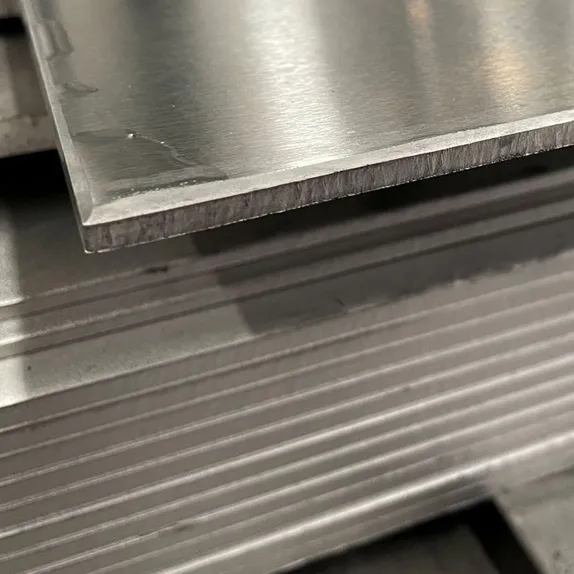
Hot-Rolled Stainless Steel Sheet
Rolled above the recrystallisation temperature, then annealed and pickled. The No.1 finish is matte and slightly scaled, which suits structural work, tank shells and any job that will be painted, lined or welded rather than seen.
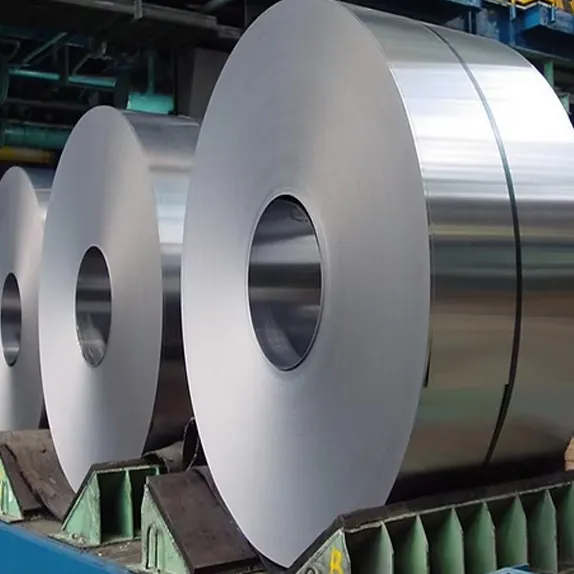
Cold-Rolled Stainless Steel Sheet
Rolled at room temperature for a tighter thickness tolerance and a brighter 2B surface. This is the form most sheet metal fabrication starts from, and the base for No.4 brushed and #8 mirror polishing.
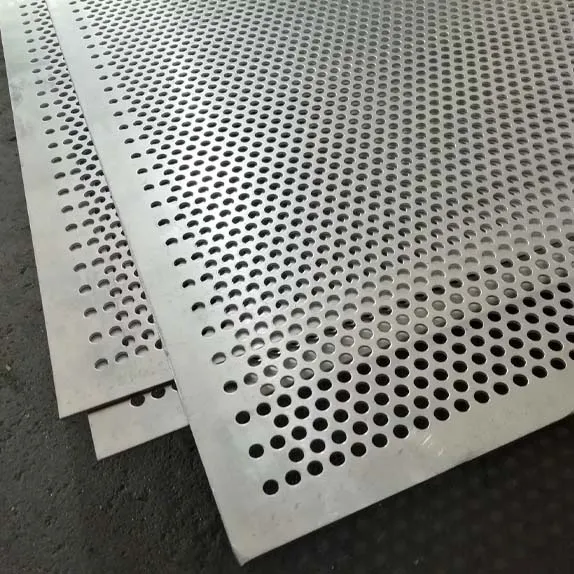
Perforated Stainless Steel Sheet
Punched with round or square holes on a staggered or straight pitch. Used for screens, guards, filtration panels, acoustic cladding and ventilation faces where airflow or sightlines matter as much as the metal.
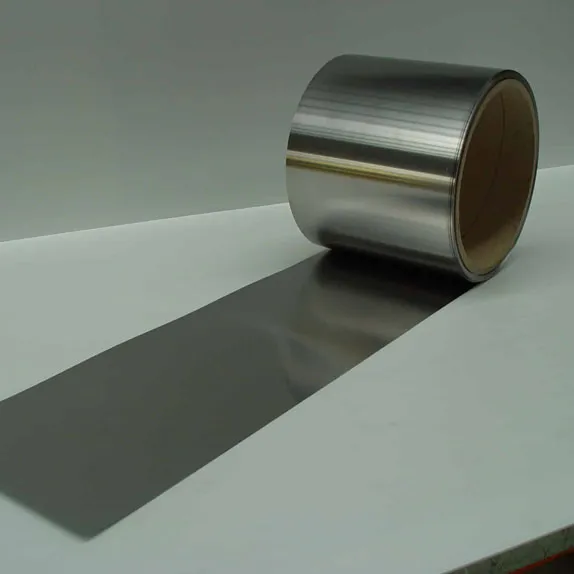
Stainless Steel Shim Sheet
Thin-gauge sheet below about 1 mm, supplied flat or in rolls. Used for alignment packing, gasket backing and machine levelling, where the thickness itself is the specification.

Stainless Steel Coil
The form sheet is cut from. Ordering by coil rather than by cut sheet pays off on repeat-run fabrication, and lets the slitting width be set to the part instead of trimming waste off a standard sheet.
Stainless Sheet Applications by Industry
Stainless steel sheets serve 6 major industry sectors. The choice of grade is determined by how corrosive the environment is and the mechanical requirements of the application.
Food Processing & Commercial Kitchens
Type 304 SS sheets are the standard material for food preparation surfaces, countertops, splashbacks, and commercial kitchen equipment.
Construction & Architecture
SS sheets are used for facade cladding, roofing, interior wall panels, and elevator surrounds.
Chemical & Petrochemical Processing
Grade 316L sheets resist acids and chlorides in process vessels, tank linings, and scrubber components.
Automotive & Transportation
Stainless sheets are formed into exhaust heat shields, trim components, and structural brackets. Type 430 is used for decorative automotive trim at a lower cost.
Marine & Offshore
Type 316 stainless steel sheets hold up well in saltwater, making them suitable for deck hardware, hull coverings, and offshore structural panels.
Medical & Pharmaceutical
Grade 316L is found in cleanroom wall panels, surgical instrument trays, and pharmaceutical equipment.
Should You Specify 304 or 316 Sheet?
Type 304 is the most affordable choice for general-purpose use. Choose Type 316 when chlorides, acids, or marine conditions demand the added protection from 2.00-3.00% molybdenum. 316L costs approximately 20-30% more than 304. For mild indoor environments or general food-contact work, 304 is sufficient and keeps project costs lower.
| Property | Type 304 | Type 316 |
|---|---|---|
| Chromium | 17.5-19.5% | 16.0-18.0% |
| Nickel | 8.0–10.5% | 10.0–14.0% |
| Molybdenum | None | 2.00-3.00% |
| Tensile Strength | 515 MPa (75 ksi) | 515 MPa (75 ksi) |
| Chloride Resistance | Moderate | Better |
| Relative Cost | Baseline | 20-30% higher |
| Best For | General purpose, food, and architecture | Marine, chemical, pharmaceutical |
Shipping & Packaging
 Heavy-Duty Wooden Box Packing
Sheets travel stacked face to face, which is how a mirror finish gets scratched. Film first, paper between, padding on the edges.
- Heavy-duty wooden boxes or strapped bundles, with moisture barrier lining
- LLDPE stretch film wrapping on all bundles
- Peelable protective film on polished, brushed and mirror finishes, with paper interleaving between stacked sheets
- Edge and corner protection with plastic padding
- Silica gel desiccants to minimise moisture exposure
- Flat-stacked on timber pallets or skids, strapped over the edge protectors
- ISPM-15 compliant wooden packaging for export
 Sheet Bundle Yard Staging
 Sheet Bundle Edge Protection
 Wrapped Export-Ready Bundles
We Export Worldwide
Sachiya Steel International supplies stainless steel products to major industrial markets across North America, Europe, the Middle East, Asia and Africa with export-ready documentation and logistics support.
 USA
 Canada
 Germany
 UK
 Italy
 France
 Australia
 South Korea
 Indonesia
 Vietnam
 Singapore
 Malaysia
 Taiwan
 UAE
 Saudi Arabia
 Qatar
 Oman
 South Africa
 Nigeria
 Egypt
