




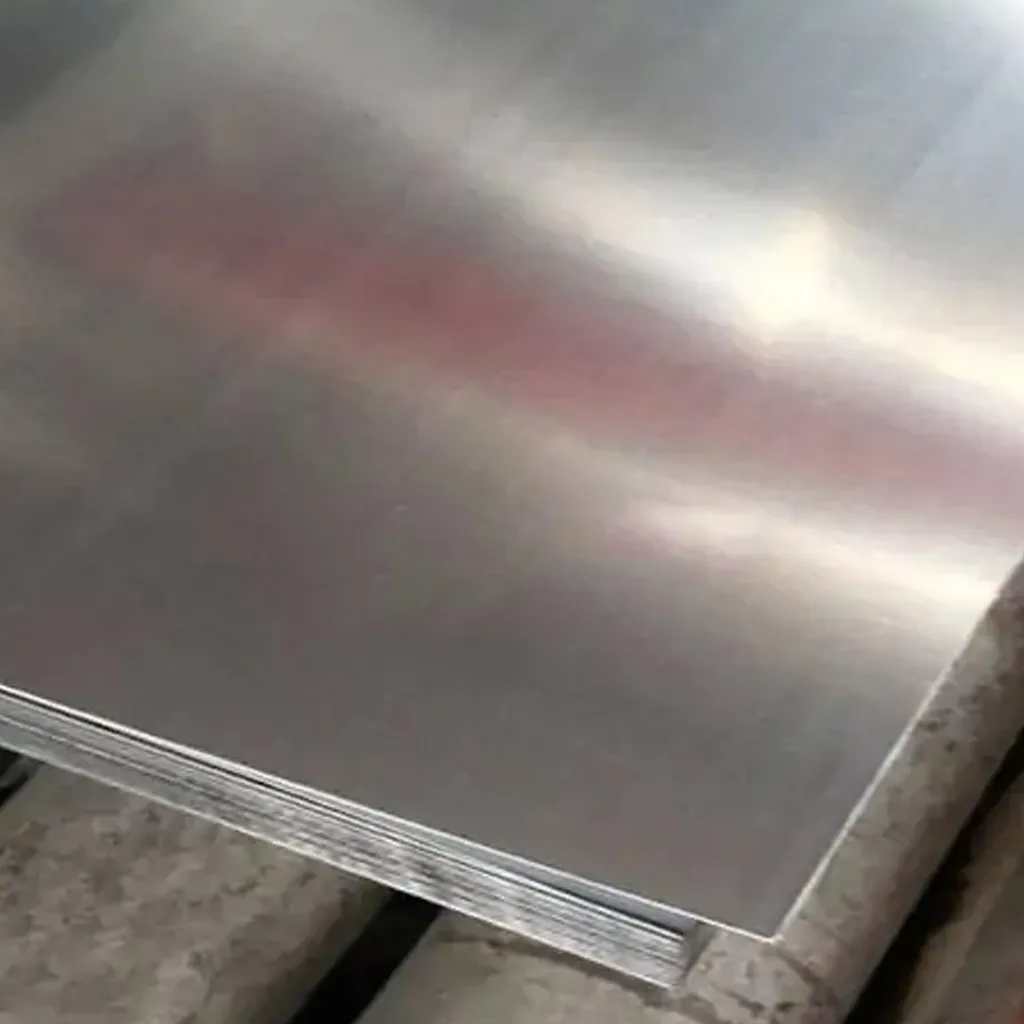
Alloy Steel Plates Specifications
The specifications of alloy steel plates, including standards, dimensions, forms, finishes, and more, are provided in the table below.
| Parameter | Specification / Range |
|---|---|
| Common Grades | ASTM A387 (Gr 11, 22, 5, 9, 91), ASTM A517 |
| Standards | ASTM A387 / ASME SA-387, ASTM A517 |
| Thickness Range | 5 mm to 150 mm (can go higher on request) |
| Width Range | 1000 mm to 3500 mm |
| Length Range | 2000 mm to 12000 mm |
| Form | Hot Rolled (HR) Plates |
| Heat Treatment | Normalized, Quenched & Tempered (Q&T), Annealed |
| Surface Finish | Mill Finish, Shot Blasted, Pickled, Coated |
| Tolerance | As per ASTM A20 / EN standards |
| Edge Condition | Mill Edge / Slit Edge |
| Supply Condition | As Rolled / Heat Treated |
Alloy Steel Plate Sizes
Alloy steel plates are stocked in these size ranges at Sachiya Steel International.
| Parameter | Range |
|---|---|
| Thickness | 3/16" (5 mm) to 8" (200 mm) |
| Width | Up to 96" (2440 mm) |
| Length | Up to 480" (12,000 mm) |
| Stock Sizes | 1'x1', 2'x4', 4'x8', 5'x10' |
| Custom Sizes | Available on request |
Alloy Steel Plate Price
Alloy steel plate costs ₹100 to ₹170 per kg in India and $0.75 - $8.50+ per kg in international markets. These prices depend on grade, thickness, and quantity. A387 Gr.22 carries a premium over lower grades. Contact us for current pricing.
Grades of Alloy Steel Plates
Cr-Mo grades serve elevated-temperature pressure vessel applications.
- Grade 5 (5Cr-½Mo): ASTM A387 Grade 5 plates are used in oil refinery reactors and hydrogen service equipment.
- Grade 9 (9Cr-1Mo): ASTM A387 Grade 9 plates are used in petrochemical reactors and superheaters for oxidation resistance.
- Grade 11 (1¼Cr-½Mo): ASTM A387 Grade 11 plate (Class 1 and Class 2) serves petroleum refining and moderate-temperature vessels.
- Grade 22 (2¼Cr-1Mo): ASTM A387 Grade 22 plates are used in power boilers and catalytic cracking units.
- ASTM A517 Grade A: used in high-strength structural parts and pressure vessels requiring good toughness at moderate thicknesses.
- ASTM A517 Grade B: used in heavy-duty structural applications and welded pressure vessels where high yield strength is essential.
- ASTM A517 Grade E: used in cranes, lifting equipment, and structural frameworks requiring a high strength-to-weight ratio.
- ASTM A517 Grade F: used in transport equipment and structural components exposed to dynamic loading and impact conditions.
- ASTM A517 Grade H: used in construction equipment and high-stress structural applications demanding superior toughness.
- ASTM A517 Grade P: used in pressure vessels and storage tanks operating under elevated stress conditions.
- ASTM A517 Grade Q: used in high-performance pressure vessels and defence/heavy engineering applications requiring very high yield strength.
- ASTM A517 Grade S: used in structural and pressure applications where a balance of strength, weldability, and toughness is required.
Available Forms of Alloy Steel Plates
Alloy steel plates are supplied in these forms at Sachiya Steel.
- Hot rolled (HR)
- Annealed
- Normalised
- Quenched and tempered (Q&T)
- Stress-relieved conditions.
Available surface finishes include mill finish, shot-blasted, and machined.
Alloy Steel Plate Industrial Applications
Alloy steel plates serve 4 industries that demand high-temperature performance or strength.
Oil & Gas Industry
ASTM A387 Cr-Mo plates serve refinery reactor vessels and hydrogen service equipment.
Power Generation
Boiler drums and superheater headers use Cr-Mo plates for creep resistance above 500°F (260°C).
Petrochemical & Chemical Processing
SA-387 Gr.11 and Gr.22 plates serve reactor vessels and heat exchangers.
Structural & Heavy Equipment
AISI 4140 and 4340 plates serve gears, shafts, and machinery frames.
Alloy Steel Plates vs Carbon Steel Plates
Alloy steel plates outperform carbon steel plates (ASTM A36/A516) in high-temperature strength.
| Property | Alloy Steel (A387) | Carbon Steel (A36/A516) |
|---|---|---|
| Alloying Elements | Cr, Mo, Ni, V | Primarily C, Mn |
| Max Service Temp | Up to 1200°F (650°C) (Gr.91) | Up to 400°F (204°C) |
| Creep Resistance | High | Low |
| Hardenability | Excellent | Limited |
Alloy plates are the right choice when service temperatures exceed 400°F (204°C).
Shipping & Packaging
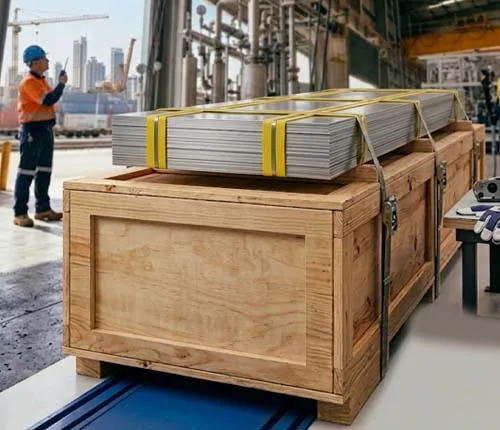 Heavy-duty wooden boxes Packing
We strictly follow seaworthy export handling standards to protect alloy steel plate from transit damage, moisture ingress, and surface contamination during long-distance dispatch.
- Heavy-duty wooden boxes with moisture barrier lining
- HDPE stretch film wrapping on all bundles
- Edge and corner protection with plastic padding
- Silica gel desiccants to minimize moisture exposure
- ISPM-15 fumigated wooden packaging for export
 Plate Bundle Yard
Staging
Plate Bundle Yard
Staging
 Plate Bundle Edge
Protection
Plate Bundle Edge
Protection
 Wrapped Export-Ready
Bundles
Wrapped Export-Ready
Bundles
We Export Worldwide
Sachiya Steel International supplies alloy steel products to major industrial markets across North America, Europe, the Middle East, Asia and Africa with export-ready documentation and logistics support.
 USA
USA Canada
 Germany
 UK
UK Italy
Italy France
 Australia
 South Korea
 Indonesia
 Vietnam
 Singapore
 Malaysia
 Taiwan
 UAE
UAE Saudi Arabia
 Qatar
Qatar Oman
Oman
 South Africa
 Nigeria
 Egypt
Egypt